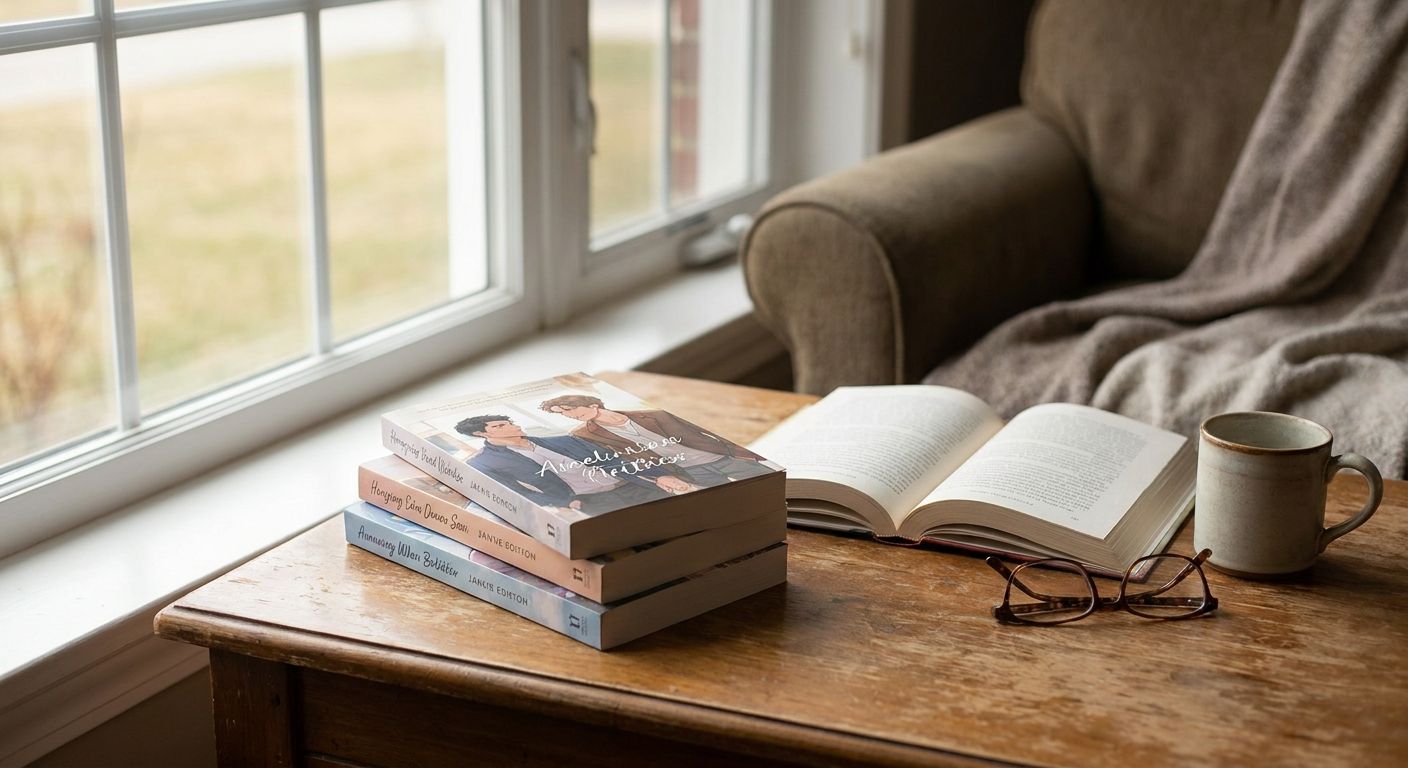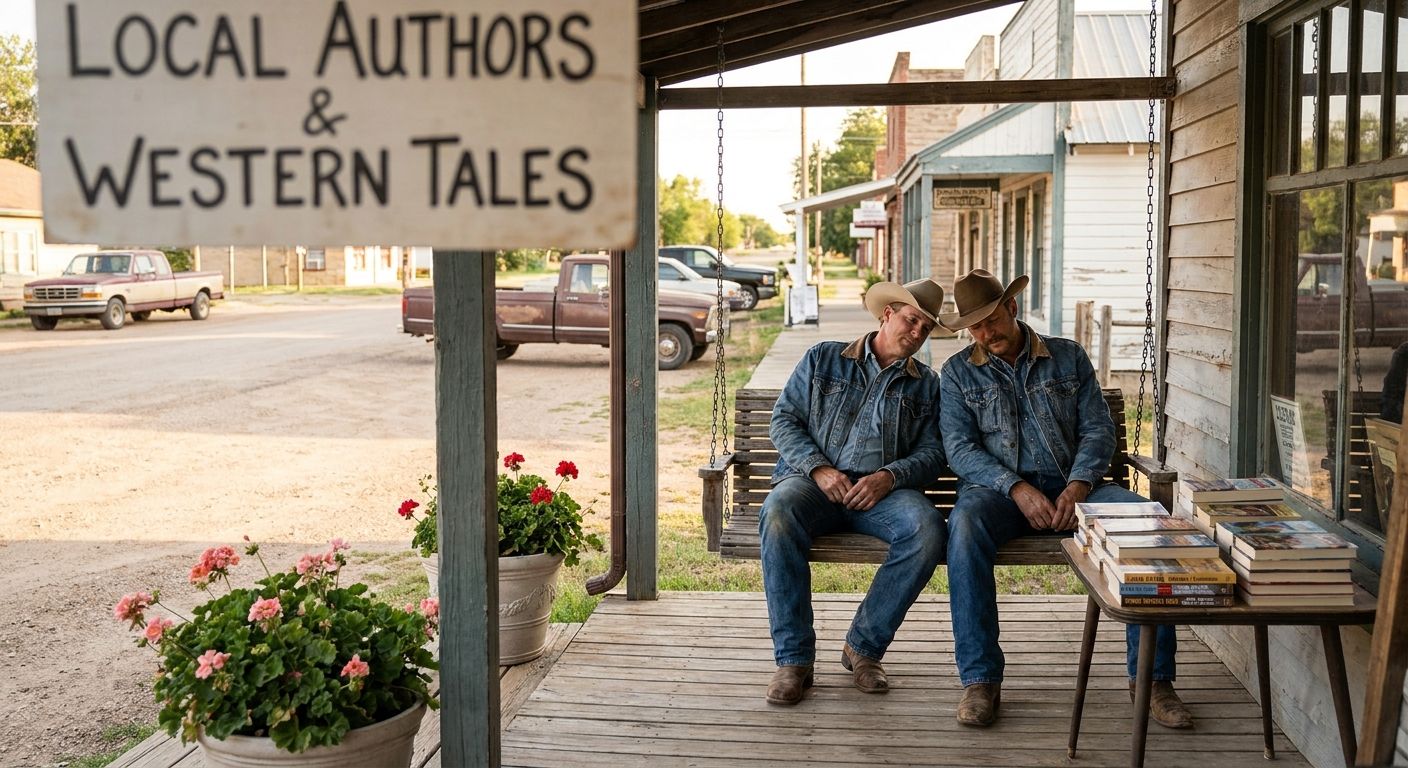
Cowboy gay romance small town readers want two things at once: ranch-hand heat and a town small enough that the diner waitress already knows who you're crushing on. That combination is the whole draw. A rancher romance set in an anonymous city apartment loses the gossip, the church-potluck run-ins, and the "everyone knew before you did" tension that makes the small-town flavor of this genre work.
This guide is built for readers chasing that specific mix in 2026, not general western romance fans who'll take a lonely bunkhouse setting and call it done. You'll get the trope vocabulary to search with, how to read heat levels before you commit, and where the common mix-ups happen when you're hunting for cowboy gay romance with real small-town texture.
- Cowboy gay romance small town books need both the ranch and the town to work as a setting, not just a rancher hero.
- Heat levels in this genre run closed-door to explicit in 2026, and checking before you start saves disappointment.
- Trope-combo searches (small town + fake dating, small town + second chance) outperform single-word genre searches on Goodreads and StoryGraph.
- Series order matters more in small-town cowboy romance because side characters from book one usually headline book three.
Why the small-town setting matters for cowboy gay romance fans
A ranch alone gives you two people and a lot of silence. A small town adds a cast: the nosy aunt who runs the feed store, the ex who still tends bar downtown, the pastor who's about to find out his choir director is dating the new vet. The small-town layer is what turns a rancher romance into a community story, and that's the layer readers in this segment are specifically shopping for.
That's also why series set in the same fictional town (a la the small-town rancher series structure Dreamspinner Press has published for years) tend to build the strongest readership. Book one's secondary rancher becomes book two's hero, and by book four the town itself feels like a character. If you're only reading standalone cowboy titles, you're missing the payoff this segment actually reads for.
Every pick on Gay Romance Org gets sorted by trope and heat level for exactly this reason: cowboy and small-town are two separate tags, and you want books hitting both.
Pin down your must-have small-town tropes
Before you search, decide which small-town flavor you actually want. "Small town" covers a wide range of stories, and vague searching gets you ranch-only books with no town scenes at all.
- Hometown-return arcs (hero leaves the ranch for the city, comes back changed)
- The one-diner, one-bar, everyone-waves town where gossip travels in a day
- Matchmaking neighbors or family pushing the leads together
- Closeted-rancher-in-a-watching-town tension
- Fish-out-of-water city guy dropped into ranch-and-town life
Check the heat level before you buy or borrow
Cowboy gay romance in 2026 spans the full heat spectrum, and small-town settings don't automatically mean sweet or explicit. Skipping this check is the single most common source of reader disappointment in the genre.
- Closed-door: fade-to-black, focus stays on the town and relationship
- Low heat: a scene or two, mostly kissing and tension
- Moderate: several explicit scenes, still plot-heavy
- Explicit/high heat: sex scenes drive a large share of page count
- Check the book's own content note or a review site's heat rating before committing
Search by trope combo, not a single genre word
"Cowboy gay romance" alone returns thousands of results with wildly different settings. Layering a second trope narrows things fast.
- Small town + fake dating (usually to fend off nosy relatives)
- Small town + second chance (the ex who left for college, city, or the military)
- Small town + forced proximity (snowed-in ranch, shared bunkhouse, injury recovery)
- Small town + grumpy/sunshine (the stoic rancher and the new, chatty town vet or teacher)
- Small town + friends-to-lovers (childhood best friends who never left)
Track series order and shared-town continuity
Most small-town cowboy series aren't standalone-friendly the way city-set contemporary romance often is. The whole point of the format is that book one's rancher hero becomes book three's best man.
- Note the series name and number before you start, not after
- Check whether the town itself has a name — that's your signal it's a connected series
- Read a series in publication order the first time through; character reveals depend on it
- Watch for a "cast list" or family tree in the front matter, common in longer ranch-town series
Cross-check reader reviews for pacing and red flags
A cover with a cowboy hat doesn't guarantee ranch-and-town balance. Reviews catch what blurbs don't.
- Look for reviewers who specifically mention how much "town" versus "ranch" the book delivers
- Check for internalized-homophobia or closet-arc warnings if that's a hard line for you
- Note narrator mentions if you're audiobook-shopping — a flat narrator sinks a slow-burn small-town read
- Skim for complaints about insta-love if you're after a slower build
“If the ranch could be swapped for a big-city loft and nothing in the plot would change, it's not really a small-town book.”
Where readers actually find these books
No single source covers cowboy gay romance small-town releases in full, and each option trades reach for reliability.
| Option | Best for | Key limitation |
|---|---|---|
| New-release roundups on review blogs | Catching 2026 releases as they drop | Coverage depends on what the blog's reviewers picked up that month |
| Backlist series marathons | Readers who want the full town-continuity payoff | Slower start; you're committing to multiple books before the arc pays off |
| Genre-tag shelves (Goodreads, StoryGraph) | Broad discovery by trope combo | Tags are reader-added and inconsistent, so quality varies |
| Reader community threads and reviews | Honest heat-level and pacing checks before buying | Opinions are subjective; cross-reference more than one review |
Browse more gay romance picks
Reader-reviewed M/M romance sorted by trope, heat level, and setting.
Common mistakes small-town cowboy romance fans make
Searching "cowboy" alone and skipping the town filter. You'll pull in isolated-ranch stories with zero community scenes, which isn't what this segment is after.
Starting a connected series out of order. Small-town cowboy series lean hard on recurring cast; starting at book three spoils who ends up with whom in books one and two.
Ignoring the heat-level tag because the cover looks sweet. Cover art in this genre is not a reliable heat signal in 2026 — check the listing or a review before you start.
Judging a book by one trope tag. A book tagged "small town" and nothing else could still be 90% ranch, 10% town. Cross-check with a second tag or a review that specifies the balance.
Skipping the acknowledgments or author's note. Authors who set multiple books in the same town often flag upcoming series entries there — useful if you're trying to plan your reading order.
FAQ
What makes a gay romance book "cowboy" versus just "western"?
Cowboy gay romance centers a rancher, ranch hand, or rodeo hero as the romantic lead, while western romance can include any frontier or rural setting without that occupation. The two tags overlap often but aren't identical.
Is cowboy gay romance always set in a small town?
No. Plenty of cowboy gay romance is set on an isolated ranch with little to no town presence. Readers who want the community angle need to check for the small-town tag specifically, not just cowboy.
What heat level should I expect from cowboy gay romance in 2026?
Heat level varies from closed-door to explicit across the genre in 2026, with no default. Check the book's content note or a review site's heat rating before starting.
Do I need to read a small-town cowboy series in order?
Yes, in most cases. These series usually reuse the same town and recurring cast, so book one's secondary rancher often becomes a later book's lead, and reading out of order spoils pairings.
How is small-town M/M romance different from contemporary M/M romance?
Small-town M/M romance leans on a tight-knit cast, local gossip, and repeat settings like a diner or feed store, while general contemporary M/M romance can be set anywhere, including cities with no recurring secondary cast.
Are cowboy gay romance books mostly closed-door or explicit?
Neither dominates; the genre spans the full range in 2026. Closed-door and explicit titles both sell well, so the cover or blurb alone won't tell you which you're getting.
Where can I find trustworthy reviews before buying a cowboy gay romance book?
Review blogs that specify trope, heat level, and town-versus-ranch balance are more useful than star ratings alone. Cross-reference more than one review when a book is new.
What tropes pair well with small-town cowboy settings?
Fake dating, second chance, forced proximity, grumpy/sunshine, and friends-to-lovers all pair naturally with a small-town cowboy setup because the tight community forces the leads together repeatedly.
One last thing
The fastest tell for a genuine small-town cowboy book is the secondary cast count. If a book names four or more recurring townsfolk by the halfway mark — not just the hero's family — you've found a real small-town read, not a ranch story wearing a small-town label. Books that never leave the property, no matter how many times "town" appears in the blurb, usually don't deliver that texture.