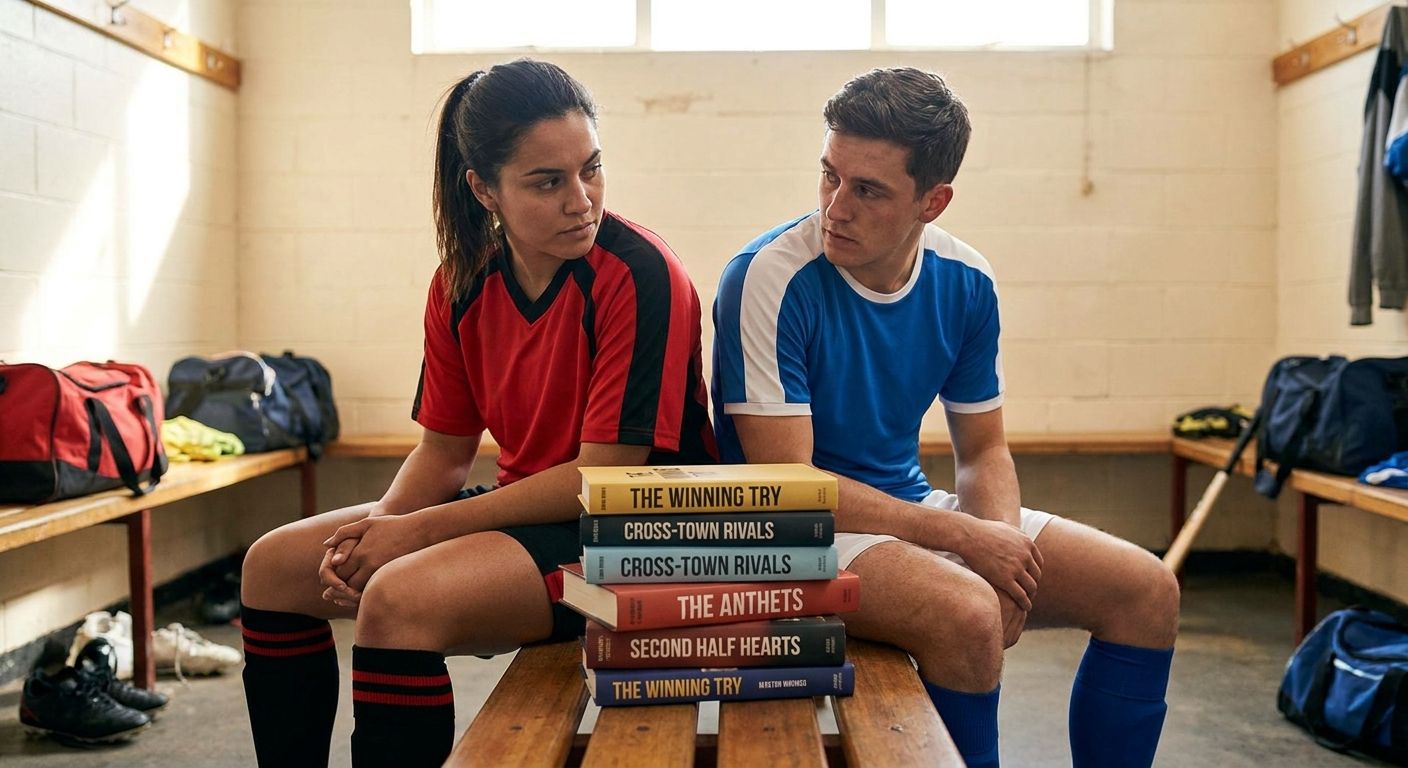
Gay sports romance rivals to lovers pairs two competitors under the same uniform, same ice, or same ring with the slow-burn tension of two guys who can't stop clocking each other across the field. It's a specific trope with specific rules, and half the frustration readers hit in 2026 comes from books tagged "rivals to lovers" that are actually enemies to lovers wearing a jersey.
- Gay sports romance rivals to lovers means competitive tension resolving into mutual respect, not cruelty resolving into forgiveness.
- Pick the sport before the book — hockey, football, and MMA dominate the trope in 2026 and narrow mislabeled search results fast.
- A real slow burn needs page count — books that resolve the rivalry inside three chapters are a soft launch, not a burn.
- Check content and heat level tags on the review itself, not the blurb, before buying.
- Series reading order matters more in this trope than almost any other — skip a book and the payoff falls flat.
Why this matters for rivals-to-lovers fans in gay sports romance
Readers chasing this trope aren't confused about romance in general — they're confused about labeling. Retailer shelves and reader-generated tags lump rivals to lovers in with enemies to lovers, and the two deliver completely different reading experiences. Enemies to lovers runs on real animosity, sometimes cruelty, that has to be dismantled before trust is possible. Rivals to lovers runs on competition: two guys who respect each other's skill and hate that respect, because losing to someone you're attracted to is its own kind of torture.
That distinction is why a search for "gay sports romance rivals to lovers" turns up a mixed bag. Fixing that starts with knowing what you're actually looking for before you open a retailer app.
Nail down what counts as "rivals to lovers" before you search
Get this definition straight first, because it filters out half the mislabeled results.
- Rivals share an arena: same sport, same league, same locker room, same podium
- The tension is competitive, not cruel — nobody's being humiliated on purpose
- Resolution comes through mutual respect, usually after one of them sees the other get hurt or lose something that matters
- If the animosity involves sabotage, family feuds, or genuine hatred, that's enemies to lovers, not rivals
- If the tension is mismatched personalities rather than competition, that's grumpy/sunshine, a different shelf entirely
Pick the sport before you pick the book
Sport choice narrows the search more than trope tags do, because rivalry logic changes by sport.
- Hockey: locker room proximity plus a long season means rivals see each other constantly — grumpy/sunshine hockey rivalries lean hard on this
- Football: rivalry often plays out across a full season with public stakes, which raises the tension ceiling
- MMA and combat sports: physical proximity in training makes for a faster burn but a shorter book, usually
- Swimming and track: individual sports with fewer team dynamics, so the rivalry is more personal and less about the group
- Baseball: long seasons and trade drama give writers room for a slower, multi-book burn
Check the heat level tag before you commit
Star rating tells you almost nothing about heat level, and blurbs routinely dodge the question.
- Look for a heat level scale (fade-to-black through explicit) on the review itself, not the retailer blurb
- Check the content warnings section for anything that changes the read — dubcon, injury, on-page violence from the sport
- Don't assume a five-star rating means high heat; plenty of five-star slow burns barely clear PG-13
- Cross-check reader reviews specifically for "heat" complaints, since blurbs oversell spice more than they oversell plot
Confirm the pacing actually is slow burn
"Slow burn" gets stamped on books that resolve their tension in three chapters, and that's not a burn, that's a soft launch.
- Look for page count — a genuine slow burn in this trope usually needs 300+ pages to earn the payoff
- Check if the book is part one of a series where rivalry carries across multiple entries, which stretches the burn even further
- Read the review's pacing notes, not just the star rating, for phrases like "drags in the middle" (good sign) versus "fast HEA" (bad sign if you want slow burn)
- Skip anything marketed as "instalove with rivalry flavor" — that's a different book entirely
“If the rivalry resolves before the tension does, it's not slow burn — it's whiplash.”
Read the review before the blurb sells you
Blurbs are marketing copy. Reviews are where you find out if the "rivalry" is one-sided pining dressed up in a jersey.
- Browse Gay Romance Org reviews for trope and heat level called out plainly, not buried in a paragraph
- Look for a reviewer noting whether the rivalry felt earned or manufactured for the blurb
- Check the comments or star breakdown for readers flagging a mismatch between marketed trope and actual content
- Compare two or three reviews on the same book before trusting a single five-star rating
Track the series order so the rivalry payoff lands
This trope leans heavily on series — same league, same team, recurring cast — and reading out of order guts the payoff.
- Check the series page for reading order before starting book two of anything
- Note whether the rivalry is contained to one book or arcs across a series (common in hockey and football series)
- Watch for spin-off books featuring a secondary rival introduced earlier in the series
- Confirm whether each book stands alone or requires the prior book's setup to make sense emotionally
Branch into adjacent tropes once you've cleared the classics
Once the core rivals-to-lovers shelf feels picked over, these adjacent angles keep the trope fresh without losing the competitive tension.
- Forced proximity via training camps or road trips layered on top of the rivalry
- Team-based rivalries where the tension plays out in front of teammates, raising the stakes
- New adult team rivalries — check college team dynamics for a lower-stakes, campus-set version of the trope
- Second-chance rivals who competed years apart and reunite at the top level of their sport
Where to find gay sports romance rivals to lovers books
| Option | Best for | Key limitation |
|---|---|---|
| Genre review sites | Readers who want trope and heat level tagged before buying | Relies on the reviewer's read of "slow burn," which is subjective |
| Retailer trope shelves | Broad browsing across many titles at once | Crowd-tagged shelves mix rivals to lovers with enemies to lovers constantly |
| BookTok/Bookstagram trope hashtags | Fast, visual discovery of new releases | Short clips oversell the "hate" angle for engagement, not accuracy |
| Author backlist and series pages | Readers already committed to one author's rivalry arc | Limited to whatever that author has actually written |
Verdict: genre review sites with clear trope and heat level tags are the fastest path to a real rivals-to-lovers read in 2026 — they're the only option built specifically to sort competitive tension from cruelty before you spend money on the wrong shelf.
Common mistakes rivals-to-lovers fans make
- Treating "rivals to lovers" and "enemies to lovers" as interchangeable search terms, then getting a darker book than expected
- Judging slow burn purely by page count without checking whether that length is tension or unrelated subplot
- Skipping reading order on team-based series and losing the emotional stakes of the rivalry's history
- Trusting a five-star average without checking what the stars are actually rating — spice, plot, or rivalry payoff are different things
- Picking a sport they don't actually care about because the trope tag matched, then abandoning the book around the 40% mark
FAQ
What is rivals to lovers in gay sports romance?
It's a trope where two athletes competing in the same sport, league, or team develop romantic tension out of competitive respect rather than cruelty. The animosity resolves through mutual admiration, usually after one sees the other's vulnerability.
Is rivals to lovers the same as enemies to lovers in MM romance?
No. Enemies to lovers runs on real hostility or cruelty that has to be dismantled, while rivals to lovers runs on competitive tension between people who already respect each other's skill.
What sports show up most in gay sports romance rivals-to-lovers books?
Hockey and football dominate the shelf in 2026 because of team proximity and season-long stakes. MMA, swimming, and baseball show up too, each with a different pace to the burn.
How long is a typical slow burn in gay sports romance?
A genuine slow burn usually needs 300 or more pages to earn the payoff, or spans multiple books in a series. Anything that resolves the rivalry in a few chapters is a faster, not a slow, burn.
Where can I check heat level before buying a gay sports romance book?
Check the review itself rather than the retailer blurb — reviews on genre sites typically call out a heat level scale from fade-to-black through explicit. Star rating alone doesn't indicate heat.
Do gay sports romance rivals-to-lovers books usually come in series?
Yes, often. Team-based settings like hockey and football lend themselves to series with recurring casts, and reading out of order can undercut the rivalry's emotional payoff.
What's the difference between grumpy/sunshine and rivals-to-lovers?
Grumpy/sunshine is about mismatched temperaments, not competition. Rivals to lovers specifically requires both characters to be competing against each other in the same sport or league.
How do I avoid mislabeled enemies-to-lovers books when I want rivals-to-lovers?
Read the review's description of the conflict, not just the tag. If the conflict involves sabotage, family feuds, or real cruelty rather than competition, it's enemies to lovers regardless of how it's labeled.
One last thing
The rivalries that hold up best on the page usually started before the book did — same juniors team, same college conference, a loss neither of them forgot. Two strangers who just happen to compete rarely earn a slow burn; history does the heavy lifting that page count alone can't fake. Look for that backstory detail in the review before you buy, and the 2026 rivals-to-lovers pick is a lot more likely to land.